“Traceable” is one of the most used — and least defined — words in the sheepskin trade. For a wholesale buyer, it should mean something specific: you can follow a rug back to where its material came from, how it was processed, and which production batch it belongs to. This article explains what to ask for, and what the answers tell you. It names no specific farm or tannery, because a traceability claim is only as good as the document behind it — and that document belongs to the supplier you are actually buying from.
Key takeaways
- Traceability means you can follow a rug to its origin, its processing and its batch — with documents, not claims.
- Ask for batch numbers on cartons and invoices, and keep a reference sample from each batch.
- Check any certificate for three things: whose name is on it, what product scope it covers, and whether it is still valid.
- A claim without a document for that batch is a marketing line, not a specification.
- Faux fur has its own traceability questions: fibre, fabric origin, dyes and finishes.
Origin: country, region, and what “origin” does not prove
Ask where the raw skins come from and whether that origin is recorded per batch or only per season. A supplier who can tie a batch number to a region and a date has a system; a supplier who can only name a country has a general statement. Note what origin does not prove on its own: it says nothing about tanning quality, dye fastness or pile density. Treat origin as one check among several, not as a guarantee of quality. Ask for the origin to be stated in writing — on the order confirmation or the invoice — because an origin that is only spoken is not traceable. If a supplier records origin per batch, ask whether the region is written on the batch record and whether the batch number on your cartons matches it. Origin rules also differ by market, so check what your destination market requires before you order rather than assuming one document fits every destination.
Tanning and processing records
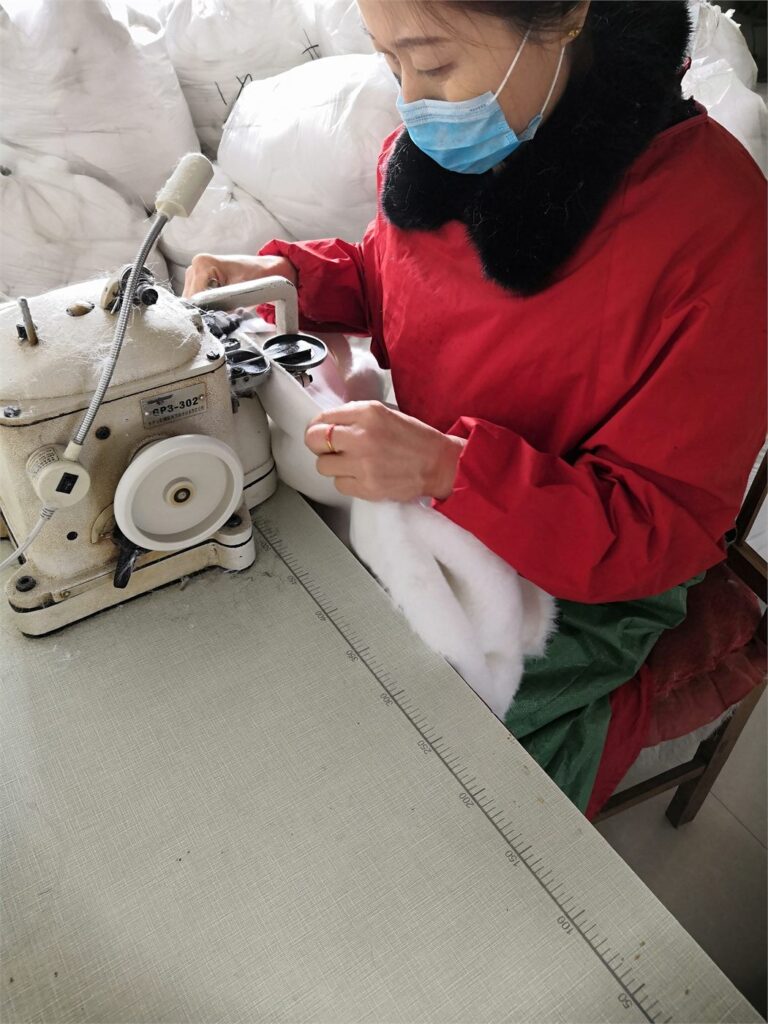
The tanning step decides much of what a buyer later complains about: odour, stiffness, shedding and dye transfer. Ask what tanning method was used for the batch you are buying and whether the tannery is named on the supplier records. If a claim such as “eco-tanned” or “formaldehyde-free” is made, ask for the report that supports it for that batch. A claim without a document is a marketing line, not a specification. Also ask how the supplier handles a batch that fails a test: is it held, reworked, or shipped anyway? The answer tells you how seriously the records are used — a test report nobody acts on is decoration. Keep the reports on file per batch, so that when a customer complains about odour or dye transfer you can answer from the record rather than from memory.
Batch identity: the number that makes everything else checkable
The single most useful traceability tool is unglamorous: a batch or lot number printed on the packaging and matched to the order. With it, you can trace a complaint back to one production run instead of blaming an entire season’s stock. Ask your supplier to put the batch number on the carton and on the invoice. When you receive the goods, check that the numbers match, and keep one rug from each batch as a reference sample. If the numbers do not match, photograph the cartons, note the mismatch on the delivery record, and contact the supplier before the goods go on the shelf — a mismatch found early is a small problem, and one found after the rugs are sold is a dispute. File the reference sample with its batch number, the date received and the invoice number: a drawer of labelled samples is the cheapest traceability system there is, and it is the first thing you will reach for when a customer brings a rug back and asks which batch it came from.
Labels and claims: how to check them
Certification marks such as Woolmark, GOTS or OEKO-TEX each cover a different thing, and each can be checked — the certifying body usually publishes how to verify a certificate number. If a supplier shows a certificate, check three things: whose name is on it, what product scope it covers, and whether it is still valid. A certificate for yarn does not cover a finished rug, and an expired certificate covers nothing. Ask for the certificate number, not just a logo on a brochure: a logo can be copied, a number can be checked. If the certificate belongs to a different company in the chain — for example, the tannery rather than the rug supplier — ask what it covers for your order, because the chain matters as much as the document. Keep a copy of each certificate with the batch file, and note its expiry date.
Faux fur is a different traceability question
Faux-fur rugs have no animal origin to trace, so the questions change: what fibre is it, where was the fabric made, and what dyes and finishes were used? Ask for the fibre composition and any test reports relevant to your market — for example, checks on colour fastness or restricted substances. A supplier who can answer these for faux fur as readily as for sheepskin has a real documentation habit, not a story for one product line. And never let a listing blur the two: a rug should be ticketed as sheepskin or faux fur, never as something in between. For faux fur, pile density and weight are part of the same check — see the material specs buyers can verify. Ask how the fibre content is declared on the label, and check that the label matches the composition the supplier states: if the label and the statement disagree, that is a question to resolve before ordering, not after the goods arrive.
What to put in your purchase order

Add four lines to your order: batch number to be marked on cartons and invoice; tanning method and any test report to be supplied with the shipment; colour fastness expectation for the intended market; and a reference sample to be kept from the same batch. None of this costs the supplier anything if the system already exists — and if it does not exist, you have learned something important before you pay.
| What to ask for | What a good answer looks like |
|---|---|
| Origin | The region and date tied to a batch number, stated in writing on the order confirmation or invoice — not just a country named in conversation. Origin alone proves nothing about tanning quality, dye fastness, or pile density. |
| Tanning and processing | The tanning method used for your batch, the tannery named on the supplier’s records, and any test reports for that batch — for example, checks on colour fastness or formaldehyde levels where your market requires them. |
| Batch identity | A batch or lot number printed on the packaging and matched to the invoice; one rug kept from each batch as a reference sample, filed with its batch number, date received, and invoice number. |
| Certificates and claims | The certificate number — not just a logo — checked for three things: whose name is on it, what product scope it covers, and whether it is still valid. A certificate for yarn does not cover a finished rug, and an expired certificate covers nothing. |
| Faux fur (where relevant) | Fibre composition, fabric origin, and dyes and finishes used, with test reports relevant to your market — for example, checks on colour fastness or restricted substances. Pile density and weight are part of the same check. |
A claim without a document for that batch is a marketing line, not a specification. Keep the batch number, the invoice, any test reports, and copies of certificates on file per batch — not per season — so a complaint can be traced to one production run.
FAQ
Is traceability the same as quality?
No. It is the ability to prove where something came from and to find the cause when something goes wrong.
Should I pay more for traceable rugs?
That depends on your market. If your customers ask about origin, the documentation is part of the product. If they do not, it is still cheap insurance against a batch problem.
What if my supplier cannot provide batch records?
Order a small trial first, inspect it on arrival, and decide whether the risk is acceptable for your market.
What documents should I keep on file?
Keep the batch number, the invoice, any test reports and copies of certificates, with the reference sample labelled to match. File them per batch, not per season, so a complaint can be traced to one production run.
How do I check a batch after delivery?
Match the carton numbers to the invoice, check the reference sample against the batch, and file the documents before the goods go on sale. Note anything missing on the delivery record the same day.
Shop the products in this guide: Ivory Genuine Sheepskin Rug — Single Pelt and Linen Genuine Sheepskin Rug — Single Pelt.