When a distributor buys rugs in volume, the face of the rug gets all the attention: pile, colour, size. The backing gets almost none — until a customer complains the rug slides across a hard floor or marks the finish underneath. By then the cost is the return, the replacement, and the lost repeat order.
The backing is the material attached to the back of a rug. The type varies with the fibres and the manufacturer, and it can help with the stability of the weave — although not every rug needs one.
One distinction matters first: attached backing is part of the rug, while a rug pad is a separate layer between rug and floor. They solve overlapping problems but are not the same product. This guide covers attached backing only. For the separate pad, read our companion guide, Rug Pad Types Compared: Felt, Rubber, and Combination Pads.
Is Jute Backing Non-Slip? The Short Answer
No. Jute backing is not non-slip.
That surprises buyers because jute looks and feels so substantial. Jute backings are made from jute fibres, shredded and spun into yarn or weft, and woven jute backing is soft, strong, and durable. None of that makes it grip a floor. Sisal Rugs Direct states it plainly: jute does not provide a non-skid surface, so a rug pad is recommended if the rug is laid where it could shift.
A guide to pads for jute rugs agrees: most handwoven jute rugs have no non-slip backing, and on a smooth floor a jute rug can creep, bunch, or slide the first time someone walks across it in socks. So if a listing says “jute backing” and nothing else, do not read non-slip into it.
The Attached Backing Types, One by One
Jute backing
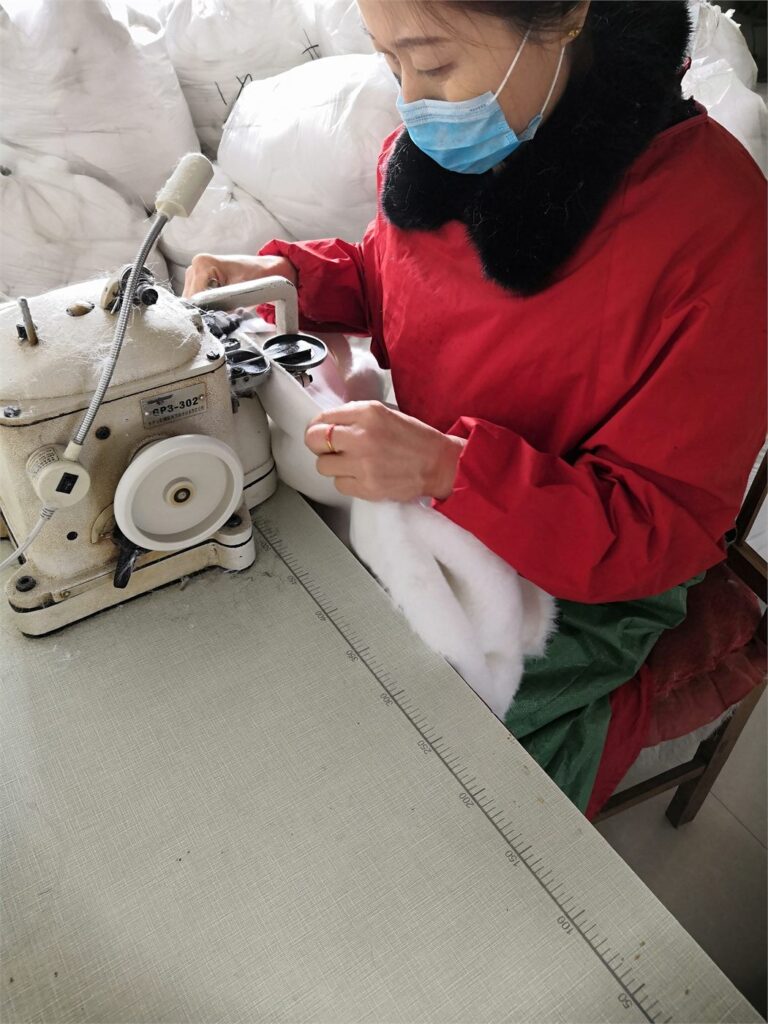
Jute is the familiar one: a woven natural-fibre backing, soft, strong, and durable, and the most common natural fibre used in carpet backings. Its job is structure — it supports the weave — not grip. It does not provide a non-skid surface, so on hard floors and anywhere foot traffic crosses the rug, a pad is recommended. Jute suits buyers who will pair the rug with the right pad.
Natural latex backing
Natural latex is made of rubber tree sap, covering the back of the rug and either baked on or left to air dry. It is mostly applied for the stability of the weave, to keep it straight — but unlike jute, felt, or action backing, it can act as a non-skid surface: the one attached backing here that can genuinely help a rug stay put on its own.
One condition: with the many flooring finishes and cleaners in use, latex can react with the floor, causing it to flake or stick, so a pad might still be recommended. Latex is the closest thing to a non-slip attached backing — not a guarantee on every floor.
Felt backing
Felt backing is glued to the rug. It allows good air flow, helps with soundproofing, offers a thicker cushion that prolongs the life of the rug, and is safe for all floor finishes. What felt does not do is grip: this backing does not provide grip to the floor, and if the rug is in an area where it can shift, a rug pad is recommended. Felt is a comfort and protection choice, not a non-slip choice.
Action backing
Action backing is made of woven synthetic fibres. It improves sound dampening and durability, prolongs the life of the rug, and gives stability and structure to the weave, indoors and outdoors. It does not provide a non-slip surface, and a rug pad is recommended under action-backed rugs. If slip resistance matters for the end customer, it has to come from something else — a pad, furniture anchoring the rug, or a different backing.
Cotton backing
A cotton backing is an environmentally friendly choice for a rug backing, and it allows for good air flow underneath the rug. Rug pads are recommended if a cotton-backed rug is used where it could shift. Cotton makes no promise about grip. Treat it like jute and felt — assume a pad is needed on hard floors unless the supplier states otherwise in writing.
No backing (unbacked)
Some rugs have no backing at all. Sisal Rugs Direct gives its polypropylene outdoor sisal rugs as the example: with no backing, air flows well through the rug. For indoor-outdoor rugs without a backing, a rug pad is recommended, and it is required if the rug is laid where it can move when walked on. If the rug is anchored by furniture, a pad is not necessary — although it still offers cushioning and prolongs the life of the rug. Unbacked is not a defect, but nothing under the rug holds it still, so either the room does that job or a pad does.
Attached rug pads: a factory-fitted exception
Some rugs are sold with a thin pad already attached to the bottom — easy to mistake for a backing. Sisal Rugs Direct lists an indoor version, latex-free, creating a non-skid layer, made of 100% natural rubber and polyester felt, and an outdoor version, outdoor-proof, at 1/4 inch thick. That is still not a separate pad you choose and buy: it is factory-fitted, and whether a given rug carries one is a question for the supplier, per rug.
Attached Backing at a Glance
| Backing | Non-slip on its own? | What it is good for | Pad still needed? |
|---|---|---|---|
| Jute | No | Woven natural fibre; soft, strong, durable | Yes, where the rug could shift |
| Natural latex | Can act as a non-skid surface | Weave stability; the only backing here that can grip | Sometimes — depends on floor finish |
| Felt | No — provides no grip | Cushion, soundproofing, air flow; safe for all floors | Yes, where the rug could shift |
| Action backing | No | Woven synthetic fibres; durability, sound dampening, structure | Yes |
| Cotton | Not stated as grip — assume no | Environmentally friendly choice; good air flow | Yes, where the rug could shift |
| No backing | No | Air flow through the rug | Yes — required where the rug can move when walked on |
Read the table as a sourcing filter, not a ranking.
Backing or Pad? Do Not Confuse the Two
Because so many backings are not non-slip, the pad does most of the real work on hard floors — which is why the two guides are separate. The companion guide covers felt, rubber, and combination pads in full: Rug Pad Types Compared: Felt, Rubber, and Combination Pads.
Two sizing facts from the jute-rug pad guide are worth carrying over. First, the pad should be about 1 inch smaller than the rug on every side — a 4 x 6 foot rug takes a pad of about 3’10” x 5’10” — so it stays hidden. Second, for a jute rug, a pad between 1/8 and 1/4 inch thick is a good fit: it adds cushion and protection without catching on doors.
What to Ask Your Supplier About Backing
Backing is easy to leave vague in an order and expensive to discover afterwards. Put these six questions in writing before you confirm an order:
- Which backing is bonded to this rug, by name? Get “jute backing” or “felt backing”, not “non-slip backing” — that is a claim, not a backing type, and for jute, felt, and action backing it would be wrong.
- Does this backing grip the floor on its own? Only natural latex, of the types in this guide, is described as able to act as a non-skid surface.
- Can the backing react with floor finishes? This matters most for natural latex, which can flake or stick on some finishes.
- Is a rug pad recommended with this backing, and which type? For jute, felt, action, and cotton backings, a pad is recommended where the rug could shift.
- Can the backing be changed or added for this rug? The backing type is selected by the manufacturer, and some makers cannot change it or add one to a given rug.
- Where is the backing stated for this rug? Ask for it per rug or per collection, in the specification — not as a general statement about the range.
A supplier who answers all six in writing is one you can quote to your own customer.
Backing and Sheepskin Rugs: What We Can Say
How does this apply to the sheepskin and faux-fur rugs we wholesale? Our genuine sheepskin rugs have a pile of 7–10 cm and are never machine washable. Our faux-fur rugs have a pile of 3 cm and are machine washable. Genuine sheepskin rugs are generally available at a minimum order of 100 pieces; faux-fur rugs at a minimum order of 300 pieces. Sizes follow the pelt sizes: Single Pelt is 2 x 3 ft, Double Pelt is 2 x 6 ft, and Quad is 4 x 6 ft. Double and Quad pelts are stitched from more than one pelt, with the seam invisible from the surface. See our Single vs Double vs Quad Pelt sheepskin rug size guide and how to clean a genuine sheepskin rug.
What this draft does not claim is the backing on our sheepskin rugs: whether a given rug carries a jute, latex, felt, or action backing — or none — is not confirmed and is not stated here. If backing matters for your customer’s floor, put it in the enquiry in writing, using the six questions above, and get the answer per rug before you order. The same applies to custom orders: start from our custom sheepskin rug wholesale page and specify the backing in the brief. Browse the range on our products page.
A Short RFQ Checklist for Backing
Copy this into your next rug enquiry:
- Rug and size ordered
- Backing type, by name (jute / natural latex / felt / action backing / cotton / none / attached pad)
- Whether the backing is non-slip on its own — yes or no
- Floor types the rug will sit on
- Rug pad recommended — yes or no, and which pad type
- Whether the backing can be changed for this rug
- Backing stated in the product specification, per rug
Seven lines, answered in writing, prevent most backing complaints: the sliding rug, the marked floor, the customer told “non-slip” about a jute-backed rug.
FAQ
Is jute backing non-slip?
No. Jute backing does not provide a non-skid surface. Jute backing is soft, strong, and durable, and it supports the weave, but a rug with jute backing can still slide on a smooth floor, so a rug pad is recommended where the rug could shift.
Which rug backing is non-slip?
Of the attached backings in this guide, only natural latex is described as able to act as a non-skid surface. Jute, felt, and action backing do not provide a non-slip surface, and cotton backing makes no grip claim. Even with latex, a pad may still be recommended depending on the floor finish.
Does felt backing stop a rug from slipping?
No. Felt backing is glued to the rug and gives cushion, soundproofing, and good air flow, and it is safe for all types of floors and finishes — but it does not provide grip to the floor. If the rug is in an area where it can shift, a rug pad is recommended.
What is action backing on a rug?
Action backing is a type of rug and carpet backing made of woven synthetic fibres. It improves sound dampening and durability, prolongs the life of the rug, and provides stability and structure to the weave. It does not provide a non-slip surface, so a rug pad is recommended under action-backed rugs.
Does a rug with no backing need a rug pad?
Yes, if the rug is laid where it can move when walked on — then a pad is recommended, and for indoor-outdoor rugs without a backing it is required in that situation. If the rug is anchored by furniture, a pad is not necessary, although it still offers cushioning and prolongs the life of the rug.
Do I still need a rug pad if the rug already has a backing?
Often, yes. Jute, felt, action, and cotton backings do not provide a non-slip surface, so a pad is recommended where the rug could shift. Natural latex can act as a non-skid surface, but a pad may still be recommended depending on the floor finish. For how to choose the pad itself, see our companion guide on rug pad types.
Sources: Sisal Rugs Direct — Carpet & Rug Backing Descriptions (jute, felt and action backing are not non-slip; natural latex can act as a non-skid surface but can flake or stick; a rug pad is recommended where the rug could shift); Crafted By Her — Rug Pad for Jute Rug: Do You Need One? (most handwoven jute rugs have no non-slip backing; pad about 1 inch smaller per side; 1/8–1/4 inch thick is a good fit for a jute rug).
Request a quote — tell us the size, colour and quantity and we will confirm the sample schedule.
Shop the products in this guide: Ivory Genuine Sheepskin Rug — Single Pelt, Gray Genuine Sheepskin Rug — Single Pelt and Linen Genuine Sheepskin Rug — Single Pelt.