A sheepskin rug stays soft and good-looking with regular light care, not with frequent washing. Shake it out, brush the pile, vacuum gently without a rotating brush, spot-clean spills quickly, and wash it only when the care label allows it, then dry it flat, away from direct heat and sunlight.
Key takeaways
- Shake and brush often; wash rarely. Dry care is the daily routine, and washing is the exception.
- Vacuum with suction only. Use a suction-only setting and never a rotating brush, which can damage the fibres.
- Blot spills; never rub. Rubbing pushes a stain deeper into the pile and can mat the fibres.
- Wash only if the care label allows it. Use cool water and a wool-safe detergent, with no bleach, brighteners or conditioner.
- Dry flat, away from heat and sun. Direct heat can shrink the skin and make it brittle, and sunlight can fade dyed wool.
Start with dry care: shake, brush, vacuum
Dry care does most of the work for a sheepskin rug, and it is the part retailers should teach first. Shake the rug outdoors to drop loose dust, then brush the pile with a sheepskin or wool brush to lift the fibres and keep them from matting. Specialist guidance from The Wool Company puts it plainly: a little frequent care is best, and a regular shake and brush-through keeps a rug looking its best.” Vacuum next, on a low-power or upholstery setting with suction only. The same guidance warns against a rotating brush, which can pull and damage the fibres. Try the dry methods first for any dirt or mark, and only move to wet cleaning when brushing and vacuuming have not removed it.
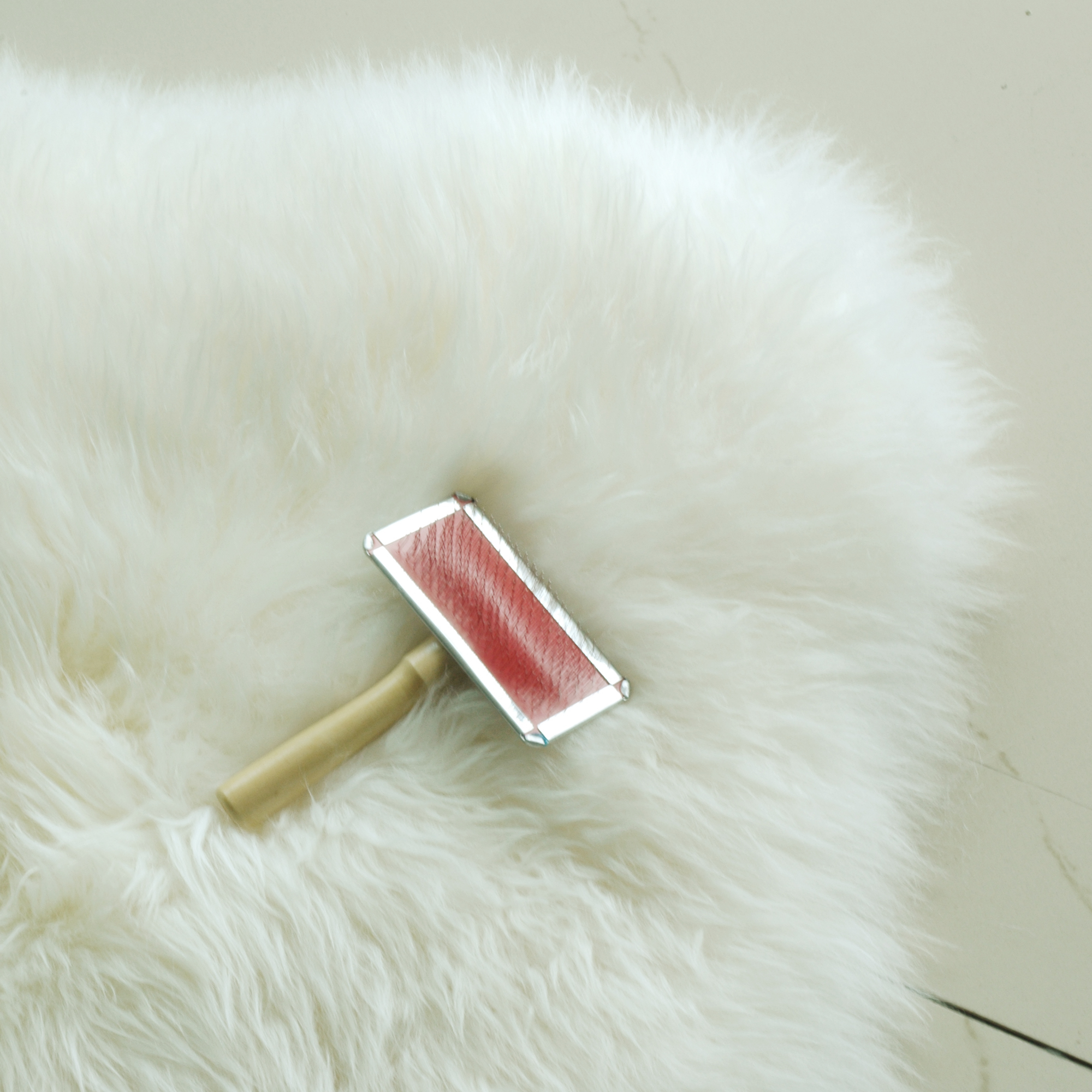
How often dry care is needed depends on where the rug lives. A rug by an entrance collects dust faster than a rug beside a bed, so the routine should follow the use. Check the pile by hand: if the fibres feel flat or tangled, the rug needs a brush.
Spills and spot cleaning
Spills are the moment most rugs are damaged, not by the spill itself but by the cleaning that follows it. The rule is simple: blot immediately with a clean cloth, and never rub. Blotting lifts the liquid out of the pile, while rubbing pushes it deeper and tangles the fibres. For dried mud, let it dry fully first, then scrape it off gently with a spoon or a blunt knife before brushing the area. Specialist cleaning guidance for sheepskin rugs follows the same order: shake and vacuum first, brush out the fibres, then spot-treat only what is left.
For a mark that blotting alone does not remove, dampen a clean cloth with cool water and a small amount of wool-safe detergent, and work from the outside of the mark inward so it does not spread. Test the detergent on a hidden area first, and use as little liquid as possible, because a soaked patch takes far longer to dry and the leather back should not stay damp. Let the area dry flat in the air, away from direct heat and sunlight, then brush the pile gently once it is dry. If the mark is still visible, ask a professional cleaner who handles sheepskin.
Washing: only when the label allows it
Washing is where sheepskin care most often goes wrong, so the first rule is to follow the care label for that specific rug. Some sheepskins can be carefully machine washed and most cannot, because tanning and finishing differ from one tannery to another. The Wool Company’s care guidance is clear: only machine-wash if the care label says it is safe to do so, using a wool or hand-wash cycle at 20 to 30 degrees Celsius, with a wool-safe detergent only. Never use brighteners, fabric conditioners, softeners or other wash additives unless they claim to be wool approved. Normal detergents can contain bleach that damages sheepskin, and biological detergents contain enzymes that break down wool fibres.
The second rule is to wash as rarely as possible. Each wash strips away some of the wool’s natural lanolin, which gives the fibres their shine and helps them resist dirt, so wash as rarely as you can. When a wash is needed, keep it cool and gentle, and dry the rug flat in the air, away from direct heat and sunlight. Never dry a sheepskin rug on a radiator or with high heat, and do not tumble-dry it on a hot setting unless the care label for that rug specifically allows it, because direct heat can shrink the skin and make it brittle. Once dry, brush the pile gently to lift it again.
The leather back needs care too
A sheepskin rug is wool on one side and tanned skin on the other, and the back deserves the same attention as the pile. The skin side is smooth and flexible when it is looked after, but it stiffens and can crack if it is repeatedly soaked or dried with direct heat. That is why every wet step in this guide comes with the same warning: use as little water as needed, and dry the rug flat in the air rather than hanging it over a heater. A rug folded while damp can hold moisture in the fold, so lay it flat or roll it loosely while it dries, and check the back by hand before putting it back on the floor.

Storage follows the same logic. Roll the rug with the pile facing outward, or lay it flat, and keep it in a dry place out of direct sunlight. Avoid folding it tightly for long periods, and avoid storing it in a damp room. Our sheepskin rugs range is sold with care guidance for each product, and the traceability guide explains what buyers should ask about where a skin comes from and how it was tanned.
What retailers should print on the care card
A care card that a customer actually reads is short, specific and written for the rug in the bag. Five lines cover most of what a buyer needs: shake and brush regularly; vacuum on suction only, without a rotating brush; blot spills at once and never rub; wash only if the care label allows it, using cool water and a wool-safe detergent; and dry flat, away from direct heat and sunlight. Add one line for deep cleaning, directing the customer to a professional cleaner who handles sheepskin, and one line telling them to keep the rug out of prolonged direct sunlight. Print the card in the language your customers read.
The card is also a sales tool. A customer who knows how to look after a rug trusts the purchase. Keep the same wording on the card, the listing and the shelf edge. Faux fur care is different, so do not reuse a faux fur care card for a sheepskin rug; our faux fur care and washing guide covers that material separately. For range planning, see our retailer stocking guide.
FAQ
Can I machine-wash a sheepskin rug?
Only if the care label for that specific rug says it is safe to do so. Some sheepskins can be carefully machine washed on a wool or hand-wash cycle in cool water, and most cannot. When in doubt, use dry care and spot cleaning, or ask a professional cleaner.
Can I vacuum a sheepskin rug?
Yes, on a low-power or upholstery setting with suction only. Do not use a rotating brush or beater bar, which can pull and damage the wool fibres. Shake the rug outdoors first to remove loose dust.
How do I fix matted pile on a sheepskin rug?
Brush the pile gently with a sheepskin or wool brush, working in the direction of the fibres, and repeat after the rug has been shaken out. Matting that does not lift may need a professional cleaner.
What should I do if a sheepskin rug gets soaked?
Blot up as much water as you can, then lay the rug flat to dry in the air, away from direct heat and sunlight. Do not hang it over a radiator or tumble-dry it on a hot setting, and do not fold it while it is damp. Brush the pile gently once it is dry.
RFQ checklist: care label wording for each grade; whether the rug can be machine washed; wool-safe detergent recommendation; drying position and heat limits; quantity split across colours and sizes within the 100-piece minimum; paid sample; bulk lead time of about 30 days from the deposit.
Sources
Shop the products in this guide: Ivory Genuine Sheepskin Rug — Single Pelt and Linen Genuine Sheepskin Rug — Single Pelt.